
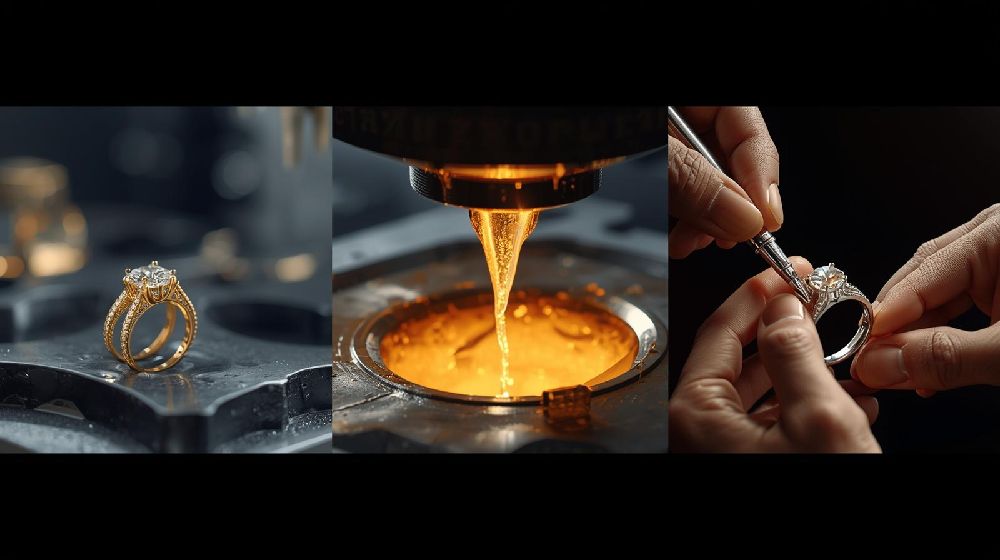
Modern gold jewelry is no longer created by hand alone—it begins on a screen. Computer-Aided Design (CAD) has revolutionized jewelry making by turning creative ideas into precise digital models that can be accurately manufactured. This seamless process ensures consistency, intricate detailing, and superior quality from concept to completion.
Step 1: Concept Development and Inspiration
Every piece of jewelry starts with an idea. Designers draw inspiration from trends, cultural motifs, customer preferences, or classic forms. Initial sketches may still be hand-drawn, but CAD allows these ideas to be refined digitally without physical limitations.
Step 2: Creating the CAD Model
Using specialized jewelry CAD software, designers build a 3D digital model of the jewelry. This model includes exact measurements, proportions, thickness, and stone placements.
Key advantages of CAD modeling include:
-
Accurate weight estimation
-
Perfect symmetry and balance
-
Ability to view designs from every angle
Designers can make instant adjustments without wasting gold or time.
Step 3: Design Validation and Optimization
Before production begins, the CAD file is reviewed for:
-
Structural strength
-
Wearability and comfort
-
Stone setting security
Software simulations help identify weak points, ensuring the design will perform well in real-world wear.
Step 4: Prototyping Through 3D Printing
Once approved, the CAD design is converted into a physical prototype using 3D printing. Wax or resin models are printed with extreme accuracy.
This step allows:
-
Fit and comfort testing
-
Client approval before production
-
Final design refinements
Traditional wax carving is replaced with speed and precision—without losing detail.
Step 5: Casting the Gold Jewelry
The printed wax model is used in the lost-wax casting process. Molten gold is poured into a mold created around the wax, forming the base structure of the jewelry.
CAD ensures:
-
Uniform thickness
-
Minimal material waste
-
Consistent reproduction of designs
Step 6: CNC Machining and Laser Work
For advanced detailing, CNC machines and laser technology refine the cast piece. These tools add sharp edges, complex textures, and seamless joints that manual tools cannot achieve with the same precision.
Step 7: Hand Finishing and Stone Setting
Despite advanced technology, the human touch remains essential. Skilled artisans:
-
Set gemstones securely
-
Polish surfaces to a high shine
-
Apply textures and final detailing
This stage blends traditional craftsmanship with digital accuracy.
Step 8: Quality Inspection and Certification
Finished jewelry undergoes strict quality checks, including:
-
Weight and dimension verification
-
Surface finish inspection
-
Structural durability assessment
Only after meeting quality standards is the piece approved for sale.
Benefits of CAD-Driven Jewelry Manufacturing
-
Faster production cycles
-
Enhanced design creativity
-
Reduced material waste
-
Consistent premium quality
-
Customization at scale
CAD allows brands to deliver complex designs with reliability and precision.
Conclusion
The transformation of CAD designs into gold jewelry is a perfect example of how technology enhances tradition. From digital modeling to hand-finished perfection, CAD ensures that every piece of gold jewelry is designed intelligently, crafted precisely, and finished beautifully.
Modern gold jewelry is not just made—it is engineered with artistry.