
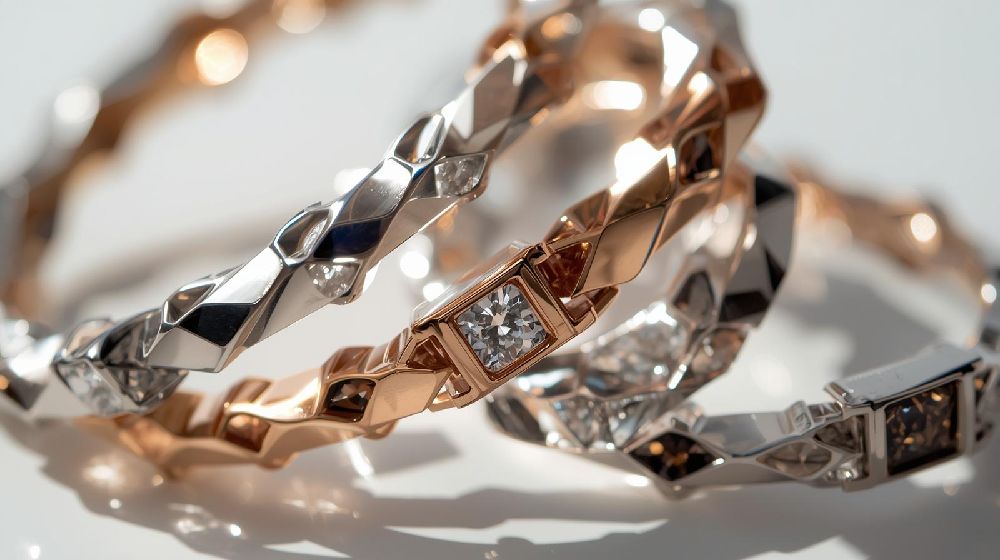
Dual-tone and tri-tone jewelry have become defining trends in modern jewelry design. By combining two or three metal colors within a single piece, these styles create depth, contrast, and visual movement. But beyond color, it is the interaction of textures that truly brings multi-tone jewelry to life.
When crafted thoughtfully, blended textures turn metal into art.
Understanding Dual-Tone and Tri-Tone Jewelry
-
Dual-tone jewelry combines two metal colors—commonly yellow gold with white or rose gold.
-
Tri-tone jewelry blends three metal shades, often yellow, white, and rose gold.
These combinations allow a single piece to complement multiple outfits and metal preferences.
Why Texture Matters as Much as Color
Color separation alone can look flat. Texture introduces character, dimension, and refinement.
Different surface treatments reflect light in unique ways, making each tone stand out while remaining harmoniously connected.
Popular Texture Techniques in Multi-Tone Jewelry
Polished vs Matte Finishes
High-polish surfaces create brilliance, while matte finishes add softness. When combined, they offer a sophisticated contrast that enhances each metal tone.
Brushed and Satin Textures
Brushed textures provide a subtle grain that pairs beautifully with glossy elements, creating depth without overpowering the design.
Engraved and Patterned Surfaces
Fine engravings or geometric patterns add detail, especially when used selectively across different tones.
Hammered and Textured Effects
Hammered textures bring a handcrafted feel, catching light unevenly for a dynamic, artistic look.
Seamless Transitions Through Precision Craftsmanship
The success of dual-tone and tri-tone jewelry depends on seamless transitions between metals and textures. Advanced techniques such as CNC machining and laser welding ensure:
-
Clean boundaries between tones
-
Precise alignment of textures
-
Smooth joins without visible seams
Precision keeps complexity elegant.
Design Balance: Harmony Over Contrast
Effective multi-tone jewelry maintains balance. Designers carefully control the proportion of each metal and texture to avoid visual overload.
One tone often serves as the base, while others act as highlights—creating harmony rather than chaos.
Wearability and Versatility
Dual-tone and tri-tone jewelry is highly versatile. It pairs effortlessly with:
-
Mixed-metal outfits
-
Both gold and silver accessories
-
Traditional and contemporary styles
This adaptability makes multi-tone pieces ideal for everyday wear and special occasions alike.
Durability and Long-Term Appeal
Blended metal designs require careful engineering to ensure consistent strength across materials. When properly crafted, dual-tone and tri-tone jewelry maintains:
-
Structural integrity
-
Texture clarity
-
Long-lasting finish
Well-executed designs age beautifully over time.
Modern Expression with Timeless Roots
While multi-tone jewelry feels modern, its roots trace back to classical design traditions. Today’s techniques allow designers to reinterpret this concept with refined textures and precision.
The result is jewelry that feels both contemporary and enduring.
Final Thoughts
Dual-tone and tri-tone jewelry succeed when color and texture work together. Through thoughtful design and precision craftsmanship, textures blend seamlessly, creating pieces that are visually rich yet perfectly balanced.
In multi-tone jewelry, true beauty lies not just in contrast—but in harmony.