
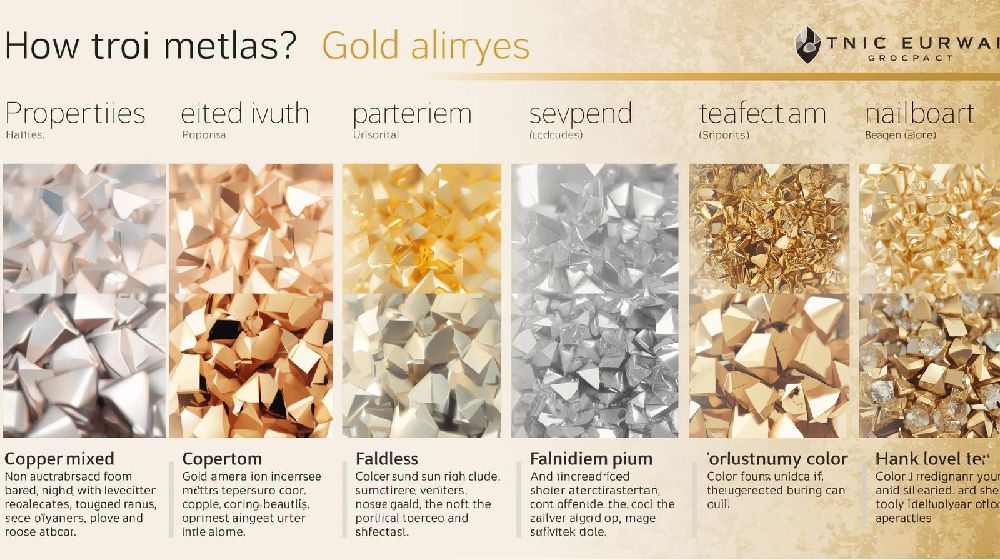
Gold is admired for its beauty, rarity, and resistance to tarnish—but in its pure form, it is too soft for most practical uses. To make gold suitable for jewelry, it is combined with other metals to form gold alloys. These carefully crafted mixtures enhance durability, control color, and improve wearability without diminishing gold’s value.
What Are Gold Alloys?
A gold alloy is created by mixing pure gold with other metals such as copper, silver, zinc, nickel, or palladium. The resulting alloy changes the metal’s physical properties while retaining the essence of gold. The proportion of pure gold in an alloy is measured in karats (K).
For example:
-
24K gold: 99.9% pure gold
-
18K gold: 75% gold + 25% other metals
-
14K gold: 58.5% gold + 41.5% other metals
Why Gold Is Mixed with Other Metals
Pure gold is extremely soft and easily scratched or bent. Alloying gold serves several important purposes:
-
Improves strength and durability
-
Enhances resistance to wear and deformation
-
Allows for intricate designs and stone settings
-
Creates different gold colors
-
Makes jewelry suitable for daily wear
Common Metals Used in Gold Alloys
Copper
Copper is widely used to strengthen gold and add warmth to its color. It is responsible for the pinkish tone in rose gold and improves hardness.
Silver
Silver maintains brightness while increasing durability. It is commonly used in yellow and green gold alloys.
Zinc
Zinc helps control oxidation during casting and improves the metal’s flow and finish.
Nickel
Nickel is often used in white gold alloys to create a bright, silvery appearance and added strength, though it may cause skin sensitivity in some people.
Palladium
Palladium is a premium white metal used in high-quality white gold. It provides a naturally white finish and excellent corrosion resistance.
How Gold Alloys Affect Color
Gold’s natural yellow hue can be altered through alloying:
-
Yellow Gold: Balanced mix of gold, copper, and silver
-
Rose Gold: Higher copper content
-
White Gold: Mixed with palladium or nickel
-
Green Gold: Mixed primarily with silver
These colors are permanent because they exist throughout the metal—not as surface coatings.
Choosing the Right Gold Alloy
The ideal gold alloy depends on lifestyle and usage:
-
18K gold: Elegant and durable for fine jewelry
-
14K gold: Highly durable for daily wear
-
22K gold: Traditional appeal with moderate strength
Each alloy offers a unique balance between purity, strength, and appearance.
Conclusion
Gold alloys transform pure gold into a practical and versatile metal suitable for everyday wear and artistic expression. By blending gold with carefully selected metals, jewelers create pieces that are stronger, more durable, and available in a range of beautiful colors—ensuring gold remains timeless, wearable, and valuable.