
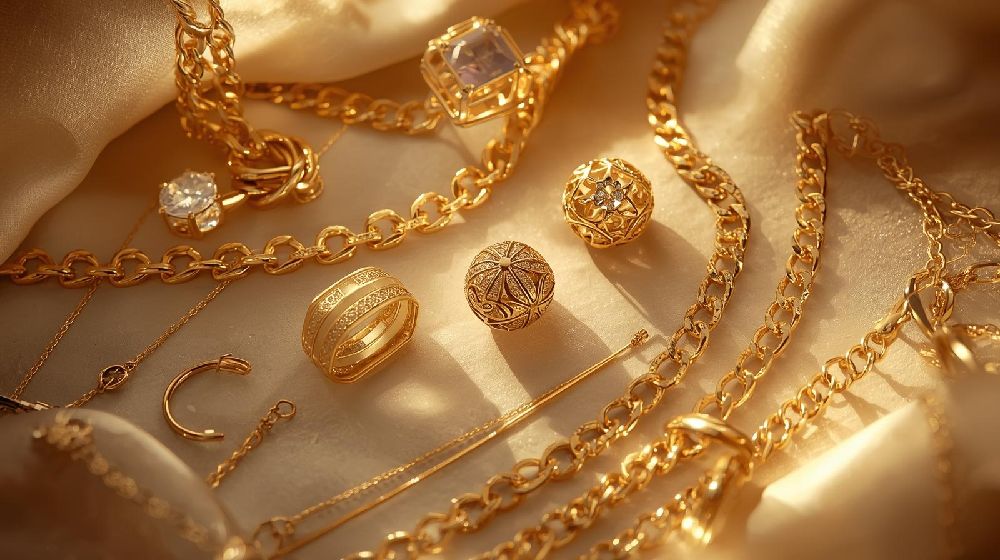
Gold jewelry is loved for its timeless beauty and durability, but climate plays a significant role in how gold behaves, looks, and lasts over time. From humid coastal cities to dry deserts and cold mountain regions, different weather conditions can impact how your gold jewelry feels, shines, and ages. Understanding these effects helps you wear and care for your jewelry more wisely.
Why Climate Affects Gold Jewelry
Pure gold is chemically stable, but most jewelry is crafted using gold alloys to improve strength. These alloys can react to:
-
Temperature changes
-
Humidity levels
-
Sweat and skin oils
-
Environmental pollutants
As a result, climate influences comfort, appearance, and maintenance needs.
Gold Jewelry in Hot & Humid Climates
Common Challenges
-
Increased sweating leads to faster buildup of oils and dirt
-
Humidity can dull the surface shine
-
Alloy metals may react with moisture over time
Best Practices
-
Choose lightweight and minimal designs
-
Prefer higher karat gold (18K–22K) for better resistance
-
Clean jewelry more frequently with mild soap
-
Remove jewelry during heavy sweating or workouts
Minimal chains, slim bangles, and stud earrings work best in humid weather.
Gold Jewelry in Dry & Hot Climates
Common Challenges
-
Dust accumulation in chains and textures
-
Dry skin causing friction and discomfort
Best Practices
-
Clean dust-prone areas regularly
-
Avoid heavily textured or engraved designs
-
Moisturize skin before wearing jewelry
-
Store jewelry in closed boxes to prevent dust settling
Smooth-polished gold finishes perform best in dry regions.
Gold Jewelry in Cold Climates
Common Challenges
-
Skin contraction makes rings feel loose
-
Cold air may cause brittle reactions in lower-karat alloys
-
Layered clothing can snag chains and pendants
Best Practices
-
Check ring fitting during winter
-
Avoid wearing delicate chains over thick fabrics
-
Store jewelry away from heaters and dry air
-
Choose sturdy designs with secure clasps
Gold bracelets and studs are safer than long necklaces in colder regions.
Gold Jewelry in Coastal Areas
Common Challenges
-
Salt air accelerates surface dullness
-
Moisture increases tarnish risk in alloy metals
Best Practices
-
Remove jewelry near seawater
-
Rinse and dry jewelry after exposure to salty air
-
Prefer plain gold over plated jewelry
-
Store with silica gel or anti-tarnish strips
Salt exposure is one of the fastest ways to reduce gold’s shine.
Gold Jewelry in Monsoon or Rainy Seasons
Common Challenges
-
Prolonged moisture exposure
-
Fungal growth in storage spaces
-
Increased skin sensitivity
Best Practices
-
Avoid wearing gold during heavy rain
-
Dry jewelry immediately if it gets wet
-
Store in moisture-free containers
-
Wear open designs that allow airflow
Monsoon-friendly jewelry should be simple, light, and easy to clean.
Choosing the Right Gold for Your Climate
| Climate Type | Recommended Gold |
|---|---|
| Humid & Coastal | 18K–22K solid gold |
| Dry & Hot | Polished yellow gold |
| Cold | Durable alloy-balanced gold |
| Mixed Climate | Dual-tone or satin-finish gold |
Climate-Proof Jewelry Care Tips
-
Clean jewelry gently every 2–3 weeks
-
Store pieces separately
-
Avoid perfumes and lotions before wearing
-
Schedule professional polishing once a year
Small habits go a long way in preserving gold.
Conclusion
Gold jewelry can be worn comfortably and beautifully in any climate—when chosen and cared for correctly. Understanding how temperature, humidity, and environment affect your jewelry allows you to enjoy its elegance without compromising its longevity.
Wherever you live or travel, smart care keeps your gold glowing.