
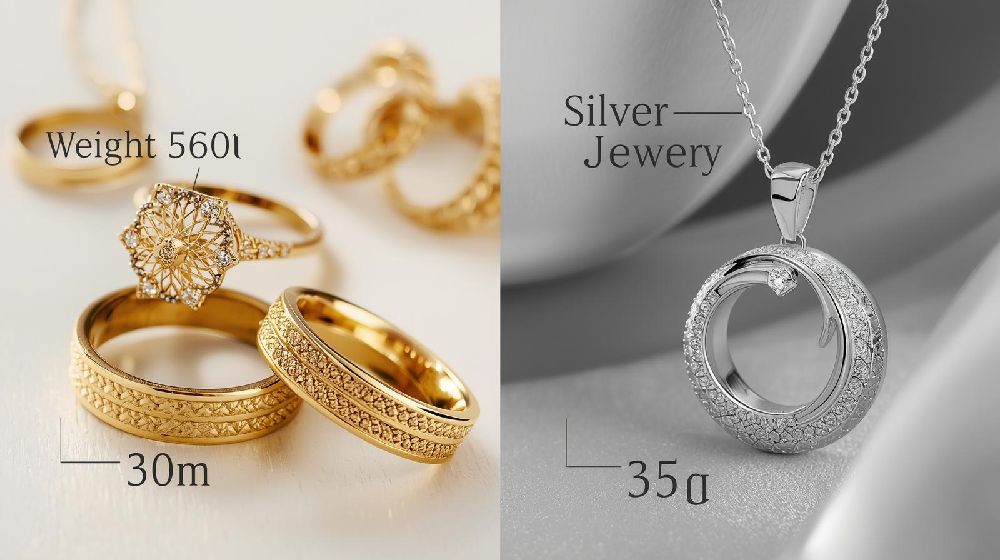
When buying jewelry, design and price often get the most attention—but weight plays an equally important role. Jewelry weight affects comfort, durability, value, and even how a piece feels when worn. Understanding the difference between gold and silver weight helps buyers make smarter and more confident decisions.
What Does Jewelry Weight Mean?
Jewelry weight refers to the mass of the metal used, usually measured in grams. It directly influences:
-
Price and value
-
Strength and durability
-
Comfort for everyday wear
-
Perceived quality of the piece
Heavier does not always mean better, but weight must match the purpose of the jewelry.
Gold Jewelry: Dense and Valuable
Gold is a dense metal, meaning even small pieces carry noticeable weight.
Key Characteristics of Gold Weight:
-
Feels heavier compared to silver of the same size
-
Higher density adds a premium, luxurious feel
-
Weight significantly impacts price due to gold’s high market value
Because of its density, gold jewelry can be made thinner while still feeling substantial—making it ideal for fine, elegant designs.
Silver Jewelry: Lightweight and Versatile
Silver is lighter than gold, which makes it more comfortable for larger or statement pieces.
Key Characteristics of Silver Weight:
-
Feels lighter and easier to wear for long hours
-
Ideal for bold, oversized designs
-
More affordable even at higher gram weights
Sterling silver allows designers to experiment with volume and size without making the jewelry uncomfortable or costly.
Comfort and Daily Wear
Weight plays a major role in comfort. Heavy necklaces or bracelets may feel luxurious but can become tiring for daily wear. Silver is often preferred for everyday fashion jewelry, while gold is chosen for occasions where premium feel and value matter.
Durability and Structure
Gold’s density adds strength, especially in higher karats mixed with alloys. Silver, while slightly softer, remains durable when crafted properly. The right balance between weight and design ensures longevity for both metals.
Design and Aesthetic Impact
Designers carefully calculate weight to enhance appearance:
-
Gold designs focus on refined thickness and balance
-
Silver designs allow bold textures and volume
Weight affects how jewelry drapes, shines, and moves with the body.
Value and Investment Perspective
Gold’s weight directly impacts resale and investment value. Silver, while valuable, is primarily chosen for style rather than long-term investment.
Final Thoughts
Jewelry weight matters because it influences comfort, quality, and value. Gold offers density, luxury, and investment appeal, while silver provides lightweight versatility and bold design freedom. Understanding these differences helps buyers choose jewelry that fits both their style and lifestyle.